
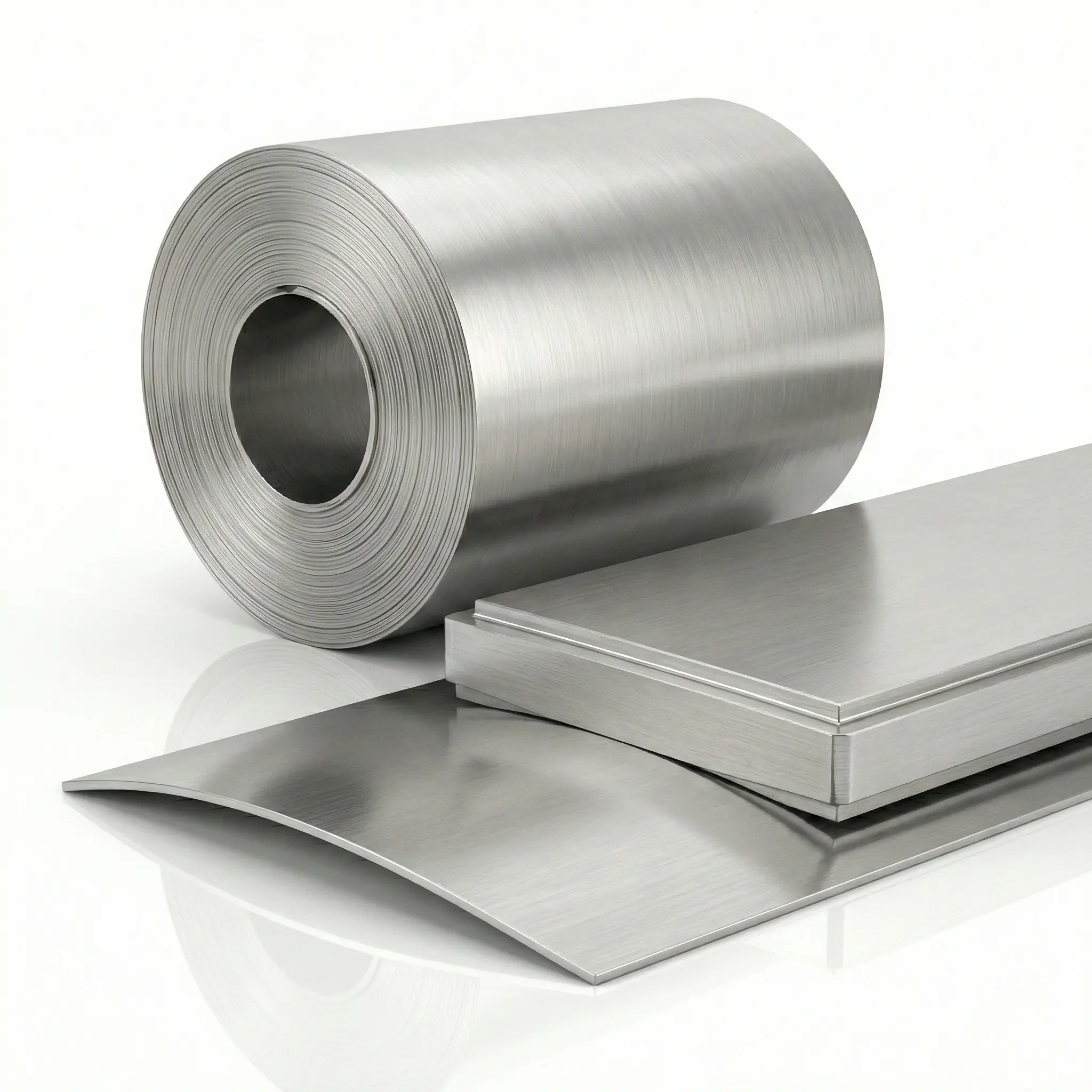
Sheets, plates, and coils are the primary flat-rolled steel products used across almost every manufacturing sector. While they are often made from the same alloys, they are distinguished by their thickness and how they are delivered. These products serve as the “skin” and “skeleton” for everything from household appliances to massive industrial storage tanks and pressure vessels.
Defining the Differences
- Steel Coils: Long, continuous strips of steel rolled into a spiral. Coils are the preferred format for high-volume manufacturers using automated stamping or laser-cutting machines.
- Steel Sheets: Flat pieces of steel, typically thinner than 6mm. Sheets are used for applications requiring flexibility and a high-quality surface finish.
- Steel Plates: Heavy-duty flat sections, typically thicker than 6mm. Plates are designed to withstand high pressure, structural loads, and extreme temperatures.
Key Technical Specifications
- Manufacturing Processes:
- Hot Rolled (HR): Rolled at high temperatures; cost-effective with a slightly rougher finish. Ideal for structural use.
- Cold Rolled (CR): Processed further at room temperature for superior dimensional accuracy and a smooth, “bright” finish.
- Common Grades: * Stainless Steel: 304/304L (General Purpose), 316/316L (Marine/Chemical), 321/347 (High Heat).
- Carbon Steel: ASTM A36 (Structural), IS 2062 (Standard), ASTM A516 (Pressure Vessel Grade).
- Surface Finishes: 2B (Matte), No. 4 (Brushed/Satin), BA (Bright Annealed), and No. 8 (Mirror).
Primary Applications
These products are the starting point for:
- Industrial Equipment: Fabrication of tanks, heat exchangers, and pressure vessels.
- Automotive & Transport: Body panels for cars, truck trailers, and railway wagons.
- Infrastructure: Bridge components, ship hulls, and structural floor decking.
- Kitchenware & Pharma: Hygienic surfaces, sinks, and medical equipment (using Stainless Steel).
Why Selection Matters?
- Yield Strength: Choosing the right plate grade (like A516) is critical for vessels holding high-pressure steam or chemicals.
- Corrosion Resistance: Using 316L coils in coastal or chemical environments prevents premature rusting and system failure.
- Processing Efficiency: Coils allow for “continuous feed” manufacturing, significantly reducing waste and production costs compared to individual sheets.