
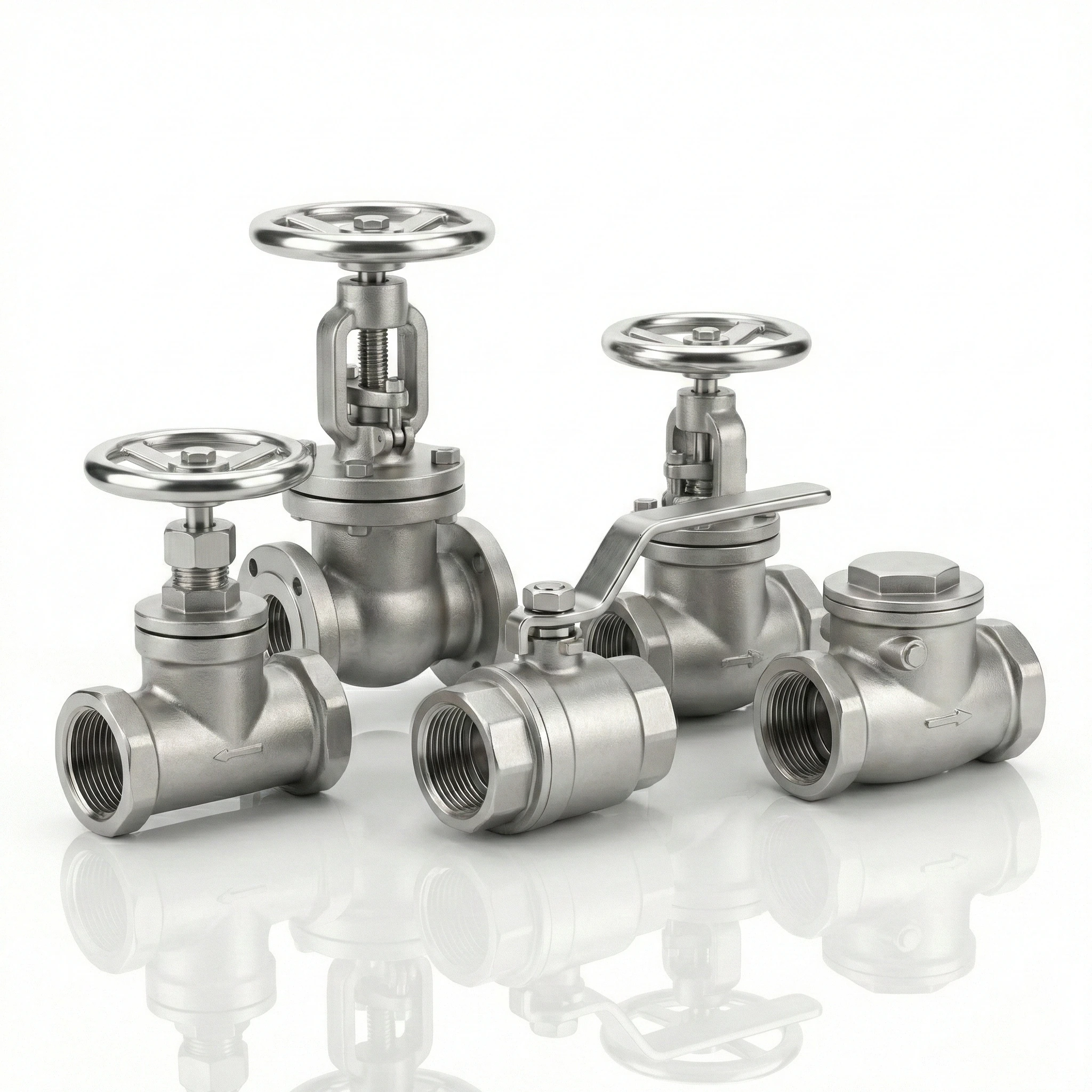
Valves are mechanical devices used to start, stop, or regulate the flow of liquids, gases, and slurries within a piping system. Acting as the “traffic lights” of industry, they are essential for managing pressure, protecting equipment from backflow, and ensuring the safety of the entire operation. From simple on/off functions to complex automated throttling, valves are the most critical moving parts in any fluid handling setup.
Core Types & Their Functions
- Gate Valves: Designed primarily for on/off service. They provide a straight-through flow with minimal pressure drop when fully open.
- Ball Valves: Utilize a rotating ball with a hole to control flow. Known for quick 90-degree operation and excellent sealing capabilities.
- Globe Valves: Used for regulating or throttling flow. Their internal structure forces the fluid to change direction, allowing for precise control.
- Check Valves (Non-Return): Automatically prevent backflow, ensuring the medium flows in only one direction to protect pumps and compressors.
- Butterfly Valves: Compact and lightweight, using a rotating disc to regulate flow in large-diameter pipes.
Key Technical Specifications
- Standards: Manufactured and tested according to API 600 (Gate), API 6D (Pipeline), and ASME B16.34 (Pressure/Temperature ratings).
- End Connections: Available in Flanged, Buttweld, Socket Weld, or Threaded ends to match the surrounding piping.
- Materials: * Body: Cast Steel (WCB), Stainless Steel (CF8/CF8M), or Forged Steel (A105).
- Trim: Stainless Steel or specialized alloys like Stellite for wear resistance.
- Pressure Classes: Standardized from 150# to 2500#.
Primary Applications
Valves are the heart of control in every major sector:
- Oil & Gas: Controlling high-pressure crude oil and natural gas extraction.
- Water Distribution: Managing municipal water supply and sewage treatment.
- Power Plants: Regulating high-temperature steam flow to turbines.
- Pharmaceutical & Food: Using “Sanitary Valves” to ensure zero contamination during production.
Why Selection is Critical?
- Flow Control: Choosing the wrong valve (like using a gate valve for throttling) can lead to rapid wear and “wire-drawing” damage.
- Safety: Pressure relief valves prevent system explosions by venting excess pressure automatically.
- Operational Efficiency: High-quality valves reduce “fugitive emissions” (leaks), saving costs and protecting the environment.