
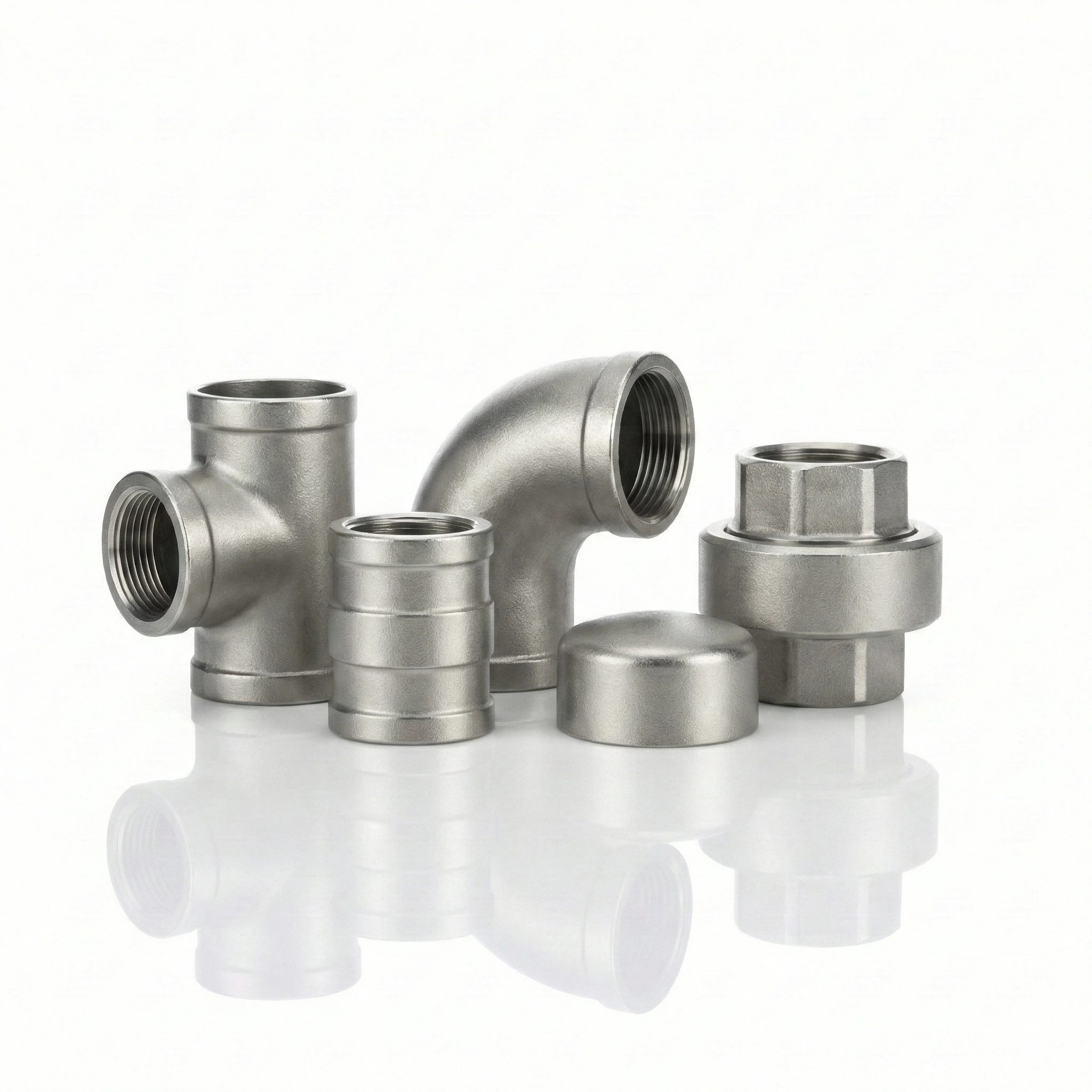
Forged fittings are manufactured by shaping solid blocks of steel under extreme heat and pressure. This forging process creates a superior grain structure, making them incredibly tough and resistant to mechanical fatigue. They are typically used for smaller-diameter piping systems (usually under 4 inches) where extreme pressure or corrosive conditions are present.
Connection Types & Standards
- Socket Weld (SW): The pipe is inserted into a recessed area of the fitting before welding. Ideal for permanent, leak-proof joints.
- Threaded (NPT/BSPT): The pipe is screwed into the fitting. Best for systems where maintenance or disassembly is required.
- Common Standards: Manufactured to ASME B16.11, MSS-SP-79, and MSS-SP-83.
Core Specifications
- Pressure Ratings: Available in 2000#, 3000#, 6000#, and 9000# classes.
- Materials: Carbon Steel (ASTM A105), Stainless Steel (F304/F316), and Alloy Steel (F11/F22).
- Key Items: 90°/45° Elbows, Equal/Reducing Tees, Couplings, Unions, Caps, and Bushings.
Primary Applications
Forged fittings are the go-to choice for high-stress industrial environments:
- Oil & Gas: High-pressure hydraulic lines and fuel systems.
- Chemical Plants: Transporting hazardous or highly reactive chemicals.
- Power Generation: High-temperature steam and condensate lines.
- Marine & Shipbuilding: Systems exposed to heavy vibration and salt-water corrosion.